

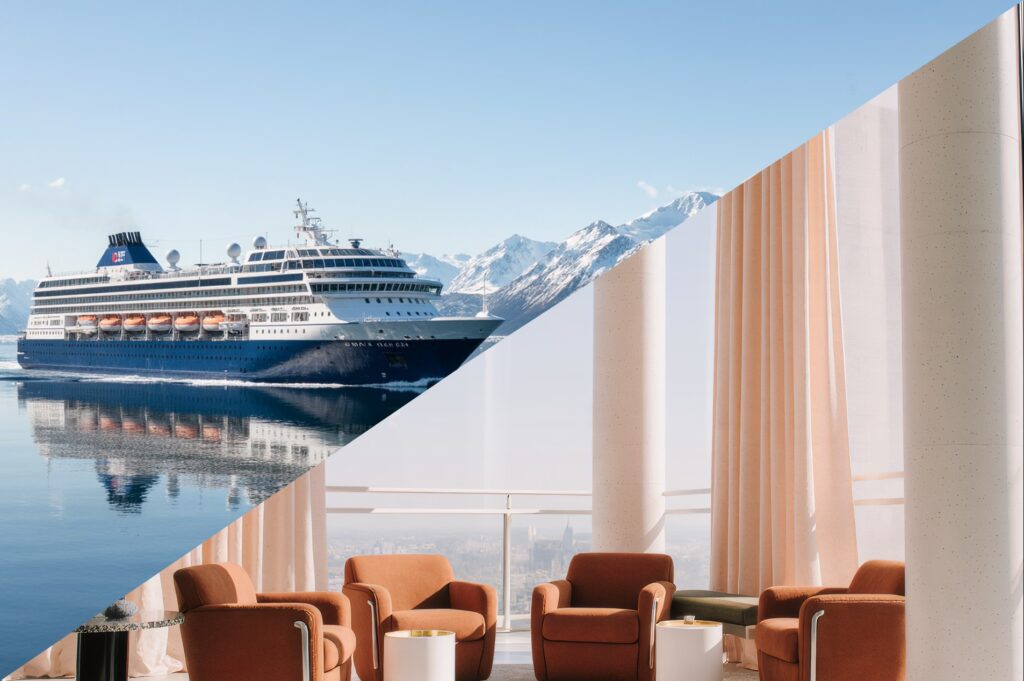
At first glance, curtains and blinds in a hotel room and those on a cruise ship cabin might look similar. In reality, the requirements are very different — and understanding those differences is key to creating safe, stylish, and functional spaces.
Regulations and Safety Standards
Hotels typically follow local fire safety regulations, which can vary widely. Cruise ships, however, must comply with the IMO’s strict international standards for flame resistance. This means fabrics used onboard must be specially engineered and certified, narrowing the choice but ensuring passenger safety.
Environmental Conditions
Hotel rooms exist in controlled environments. Cruise ships, on the other hand, face salt air, constant movement, and high UV exposure. Curtains and blinds must be designed to resist fading, corrosion of tracks, and the wear caused by motion at sea.
Fixings and Track Systems
Hotels can use standard curtain rails or blind mechanisms. On ships, every fitting must be engineered to withstand vibration and movement. Secure fixing systems prevent curtains from swaying or blinds rattling during rough seas.
Aesthetic Demands
Both hotels and cruise ships aim to deliver comfort and style, but cruise ships often require more versatility. A single vessel may include everything from luxury penthouse suites to family staterooms and grand theatres, each needing window treatments tailored to function and brand identity.
Maintenance and Longevity
Cruise ship interiors are in near-constant use, with rapid turnaround between voyages. Window treatments must be durable and easy to clean, maintaining appearance and performance under demanding conditions.
In summary: while hotels and cruise ships share the goal of creating inviting spaces, the practical and regulatory differences mean that curtains and blinds for marine environments are a specialist discipline — one that requires expertise and experience.